How can families manage Type 1 diabetes more holistically while strengthening parent-child communication day to day?
Codi
Healthcare
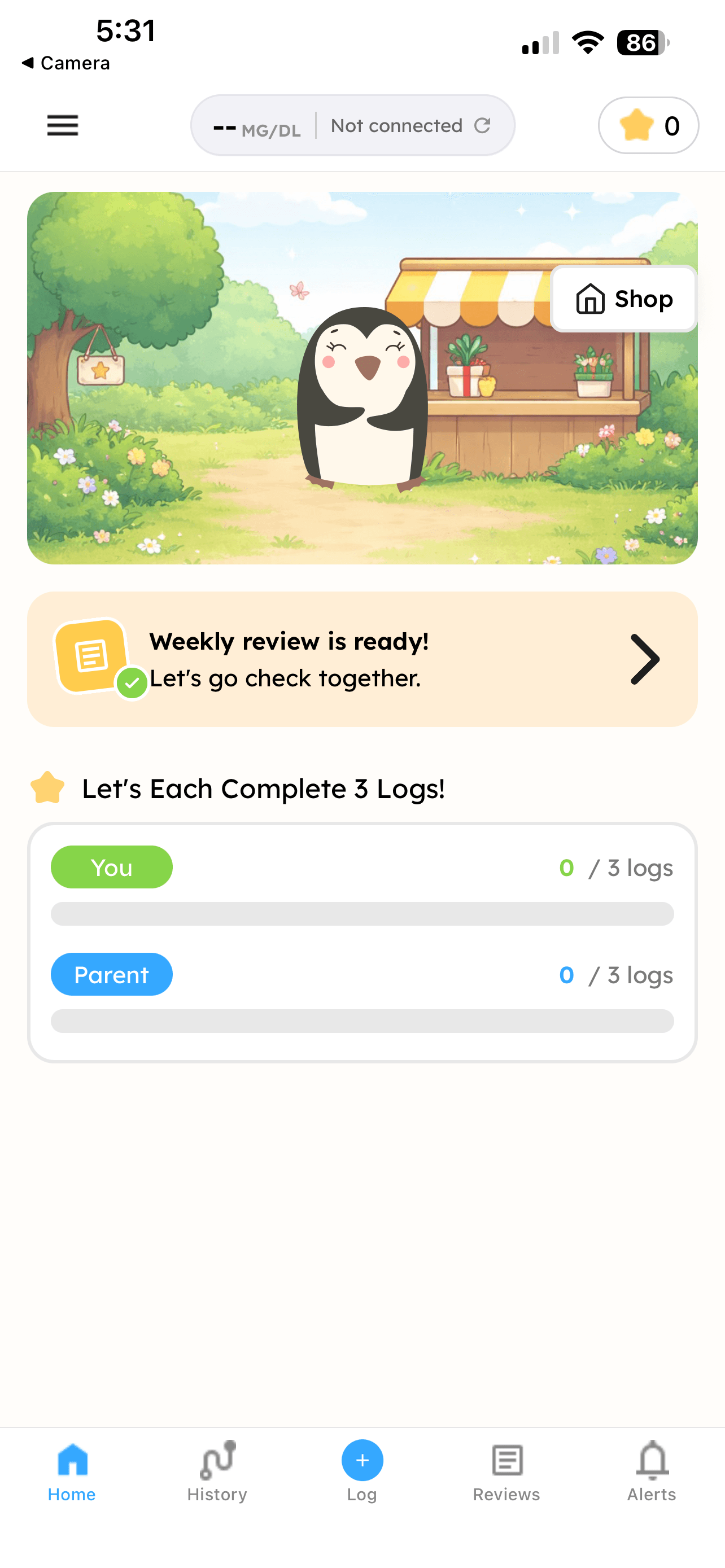
Codi is a collaborative mobile app for families navigating Type 1 diabetes. It helps children and parents communicate clearly through a research-backed, user-centered experience, supported by a University of Michigan-backed research study.
Role
UX Engineer & Full-Stack Mobile Developer
Timeline
November 2025 - May 2026
Stack & Methods
Development
Design & Research
Demo
Loading video...
My Work
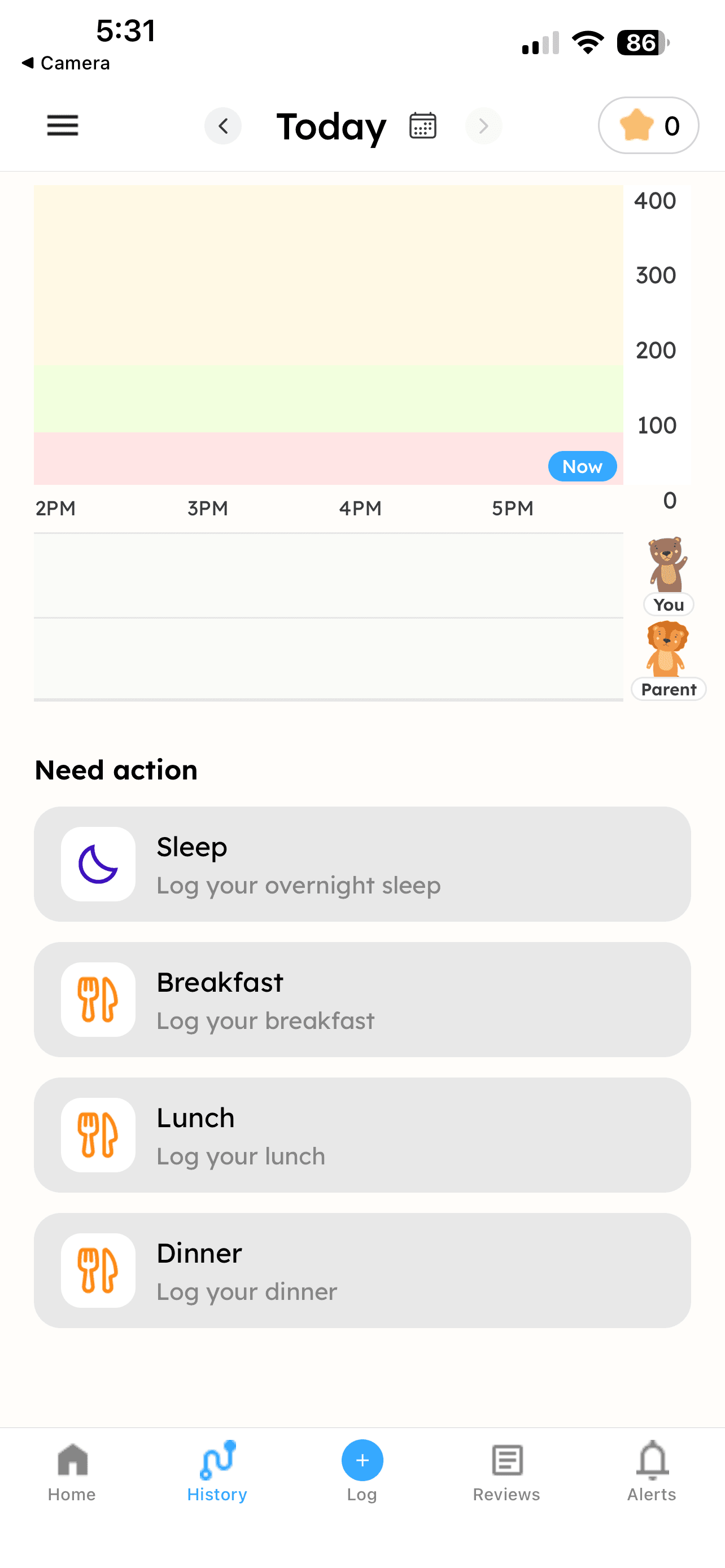
I joined the Codi team when the PhD student leading the research was looking for a developer, and I fulfilled the needs the team had while adding my own contributions. Together, we built a shared decision system that helps families capture daily health events, detect conflicts, and resolve them clearly.
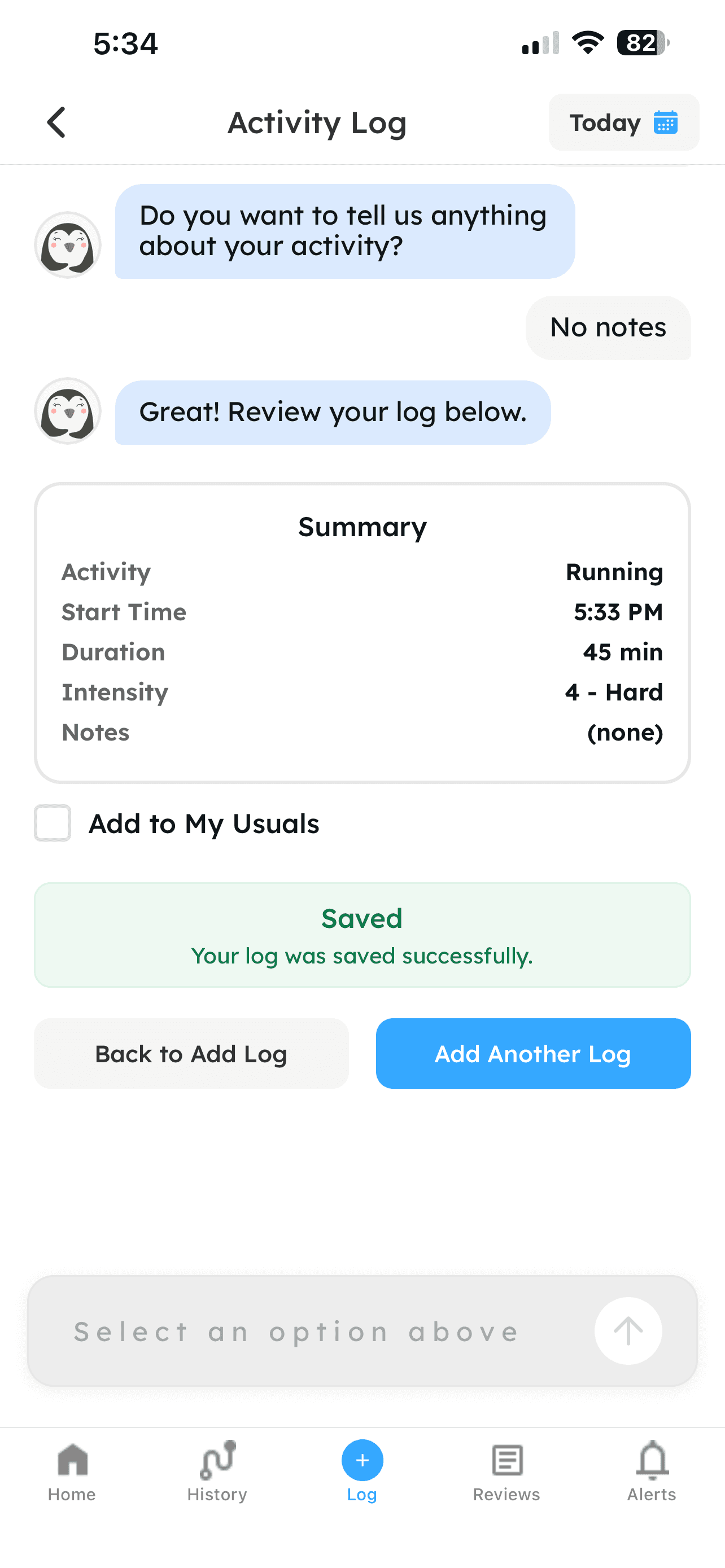
I built the conversational logging UI for both children and parents so entries feel guided instead of form heavy. I implemented structured capture flows for food, activity, mood, symptoms, sleep, and insulin updates, and added fallback branches like "I don't remember time" and "I'm unsure about carbs" to reduce drop off and incomplete logs. I also implemented fast path selection for recurring behaviors while preserving full custom logging when needed.
I then built the mismatch resolution engine. I built type specific comparison rules across child and parent logs (time windows, carb deltas, intensity and quality mismatches, symptom and mood differences), and implemented urgent routing for symptom and negative mood cases so parent visibility is immediate when risk is higher. I built a decision flow where child and parent choose the correct log, submit rationale, notify each other, and converge on final data, and added keep, edit, and discard handling so data quality improves through explicit reconciliation. The toughest part to build was the database schema for logging events and handling mismatch resolutions synchronously.
Beyond these features, I built core React Native communication and care coordination flows, turned usability findings into reusable components and clearer interactions, and partnered with design and research to iterate quickly. I ran weekly cross functional reviews across supervisors, design, engineering, and research, aligned engineering with UX goals to reduce rework and ship faster, and expanded frontend ownership while maintaining delivery momentum.
Outcome
I led frontend delivery and shipped production ready child and parent experiences from research insights, which established a production ready frontend foundation for continued feature delivery. Our mismatch detection and resolution workflows improved family data alignment, and our weekly reviews tightened feedback loops between research, UX, and engineering. Codi is now positioned for pilot testing with clearer validation milestones. Working on Codi improved how I translate research into product decisions and implementation scope.
Looking ahead, I'm focused on running pilot testing with research trial participants to see how the app holds up outside a controlled environment. Whatever we learn from that pilot will directly shape the sprints ahead.